
Co-funded by the European Union

Youth work that genuinely includes blind and visually impaired young people.

VISION was an Erasmus+ training course hosted by Asociația Clubul Sportiv Forza Junior Costuleni in Iași, Romania — six countries building methods that actually work, together with blind people, not just for them.

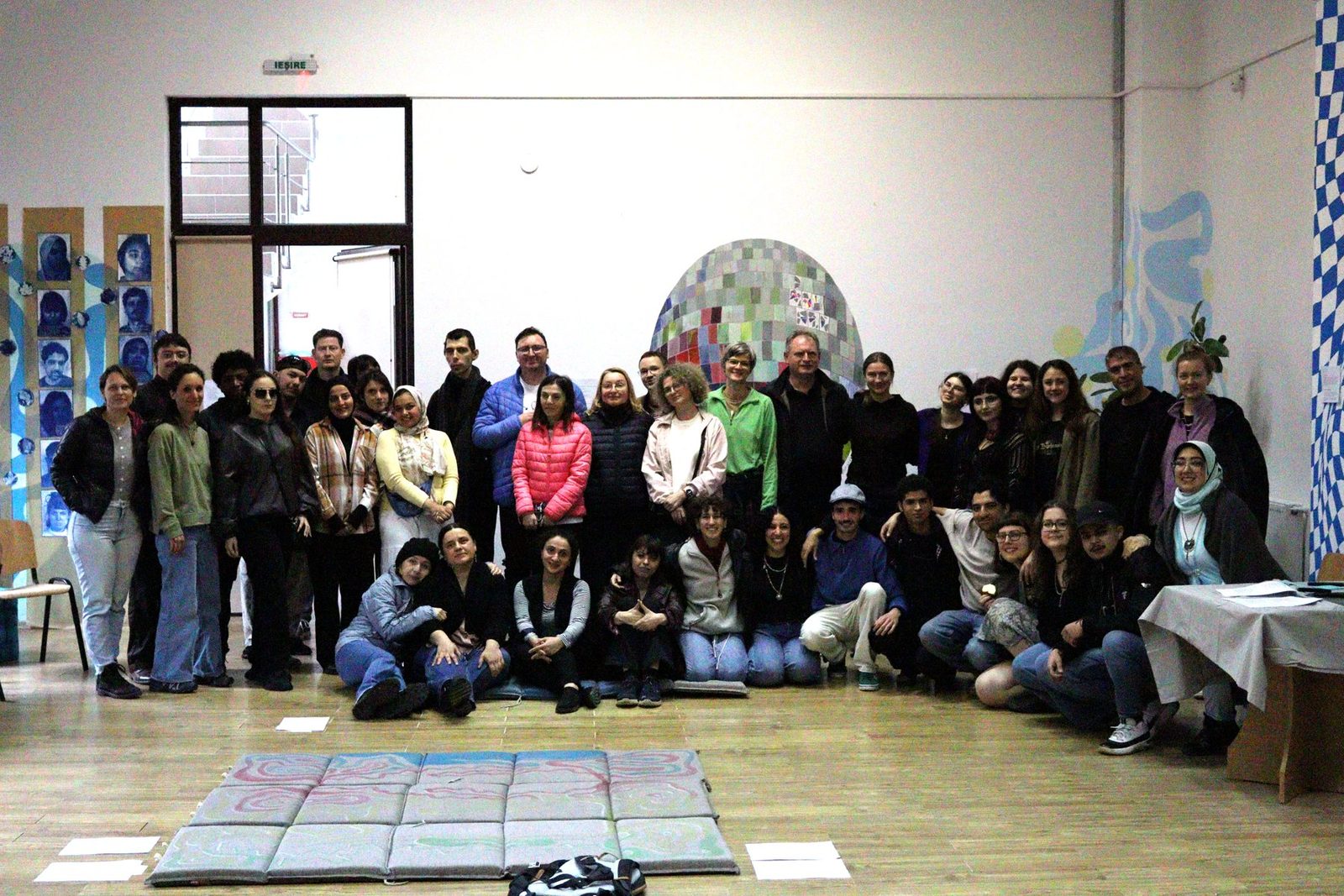
The international VISION team — youth workers from the six partner countries — standing together, smiling, during the training course in Iași.
The international VISION team at the training course in Iași, Romania.

About VISION

For seven days, youth workers from six organisations that work with blind and visually impaired people discussed, tested and built — together with and around blind people themselves — methods and processes that actually work: exchanging knowledge, comparing national practices and pressure-testing every idea for real-life applicability.

Sport, culture, technology and everyday activities were all put through the same question: does this genuinely include a blind young person? This site — and the guide it links to — follows that journey, workshop by workshop.

6
Countries
6
Partner organisations
7
Days of training
1
Shared question

Where we start from

Before building methods, every team presented how blind and visually impaired people actually live in their country. The picture differs, but the pattern is shared: services exist on paper, independence is won in practice.

Romania

  • 80,000+ people live with visual impairments; employment sits below 10%.
  • Mainstream “inclusion” is often a functional illusion, so special schools still do the real work.
  • At the “Moldova” Special High School the first weeks start with the body — orientation, tactile recognition, the white cane — with Braille as the foundation of literacy.
Serbia

  • The team interviewed Miloš Pržić (Association of the Blind, Smederevo). His conclusion: things are improving “maybe even too slowly”, and society itself is still the main barrier.
  • Infrastructure is the bright spot — Belgrade's new bus station has clear tactile paving, and Air Serbia carries a Braille safety manual on every flight.
  • Employment is the biggest issue: no adaptations are needed, yet interviews still end in pretexts.
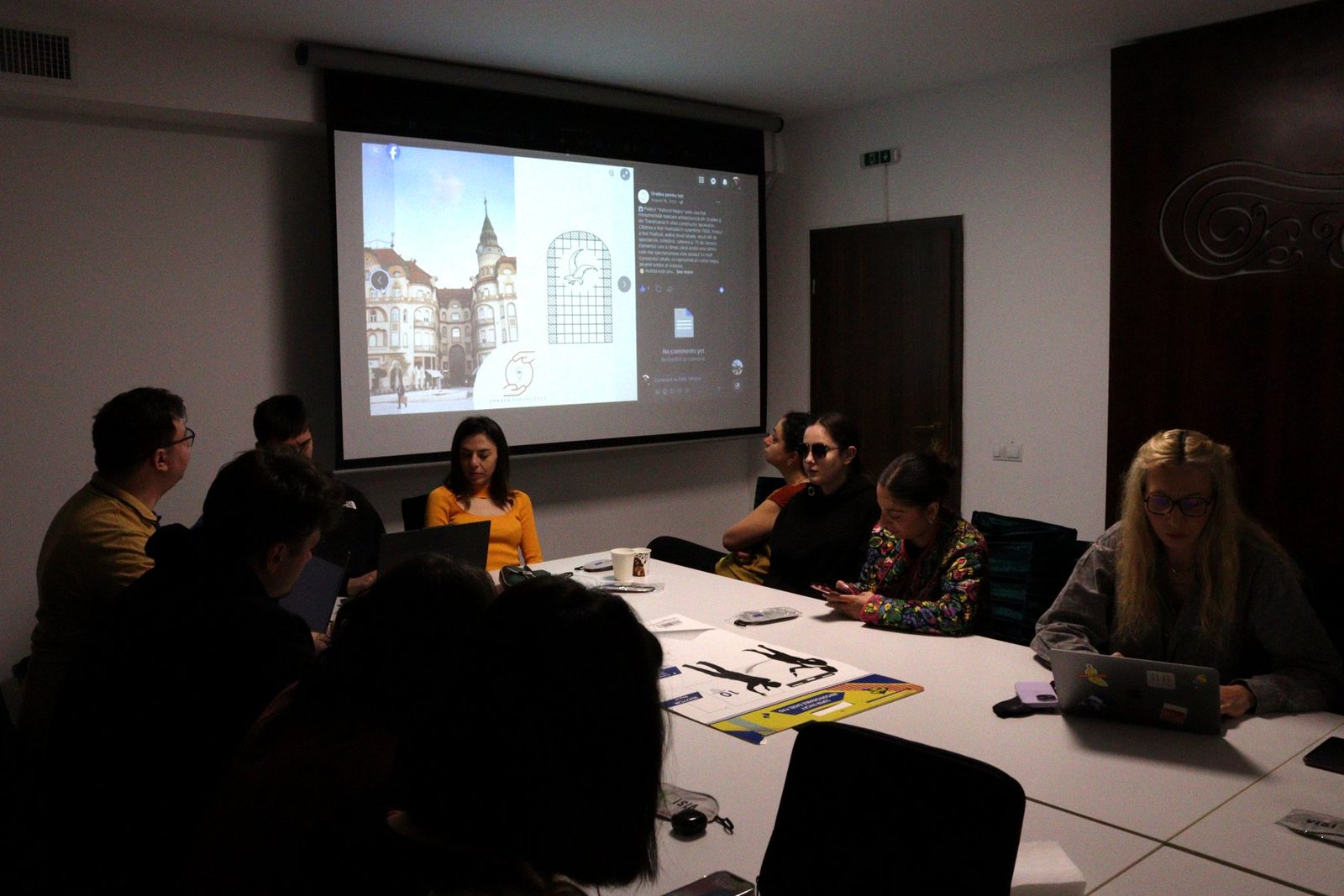
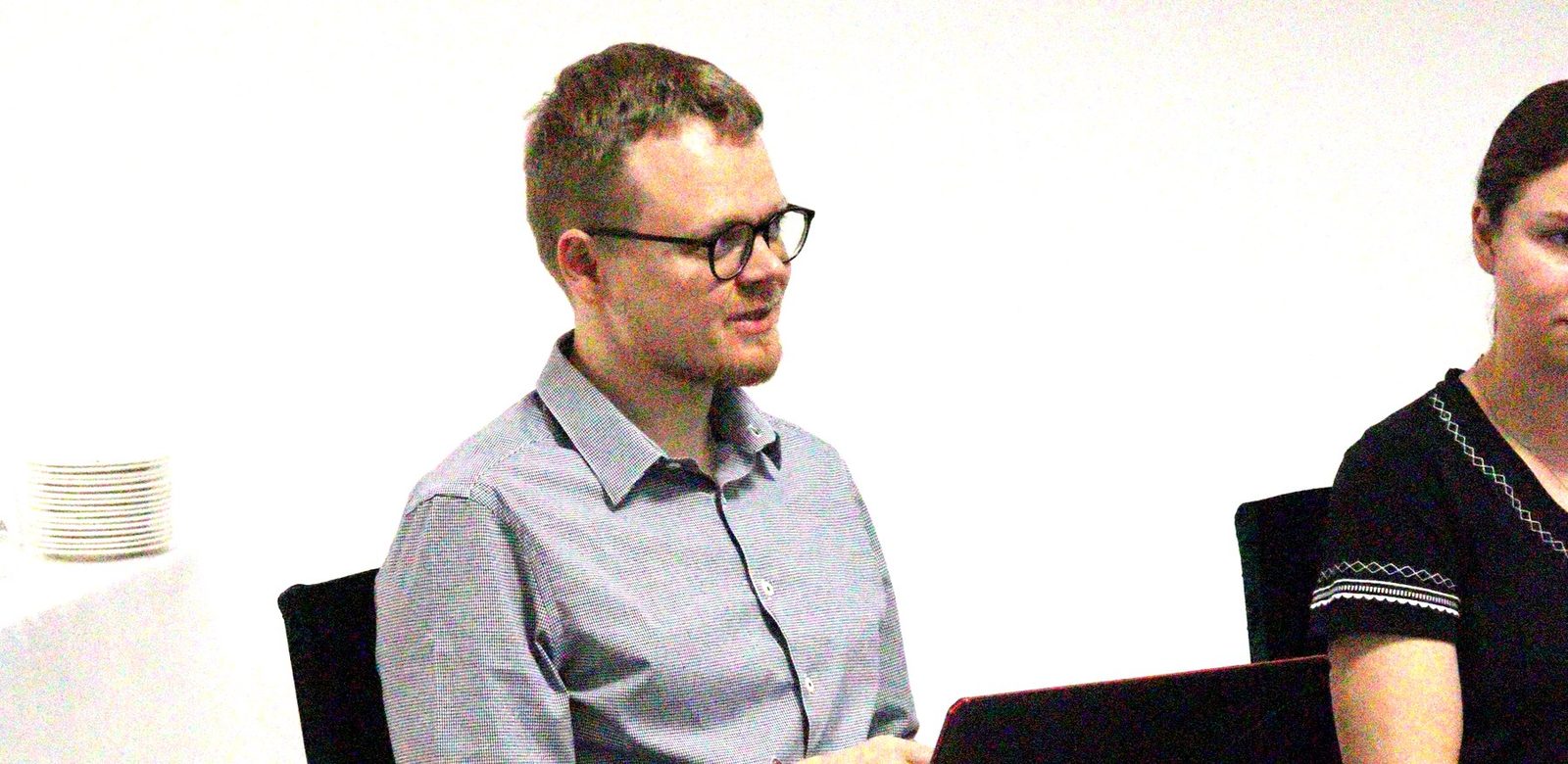
The Osvěta team presenting the Czech system, seated with a laptop while the group listens.

Czechia

  • A service chain that covers the whole life: Raná péče (early intervention), assistants in school, support centres, university services.
  • Rehab NGOs (Tyfloservis, SONS) teach Braille, technology and independent living to adults.
  • Good practices: free tactile map printing from Mapy.com, and a state ID card that lets a guide travel free while the VI person pays 25% of the fare.
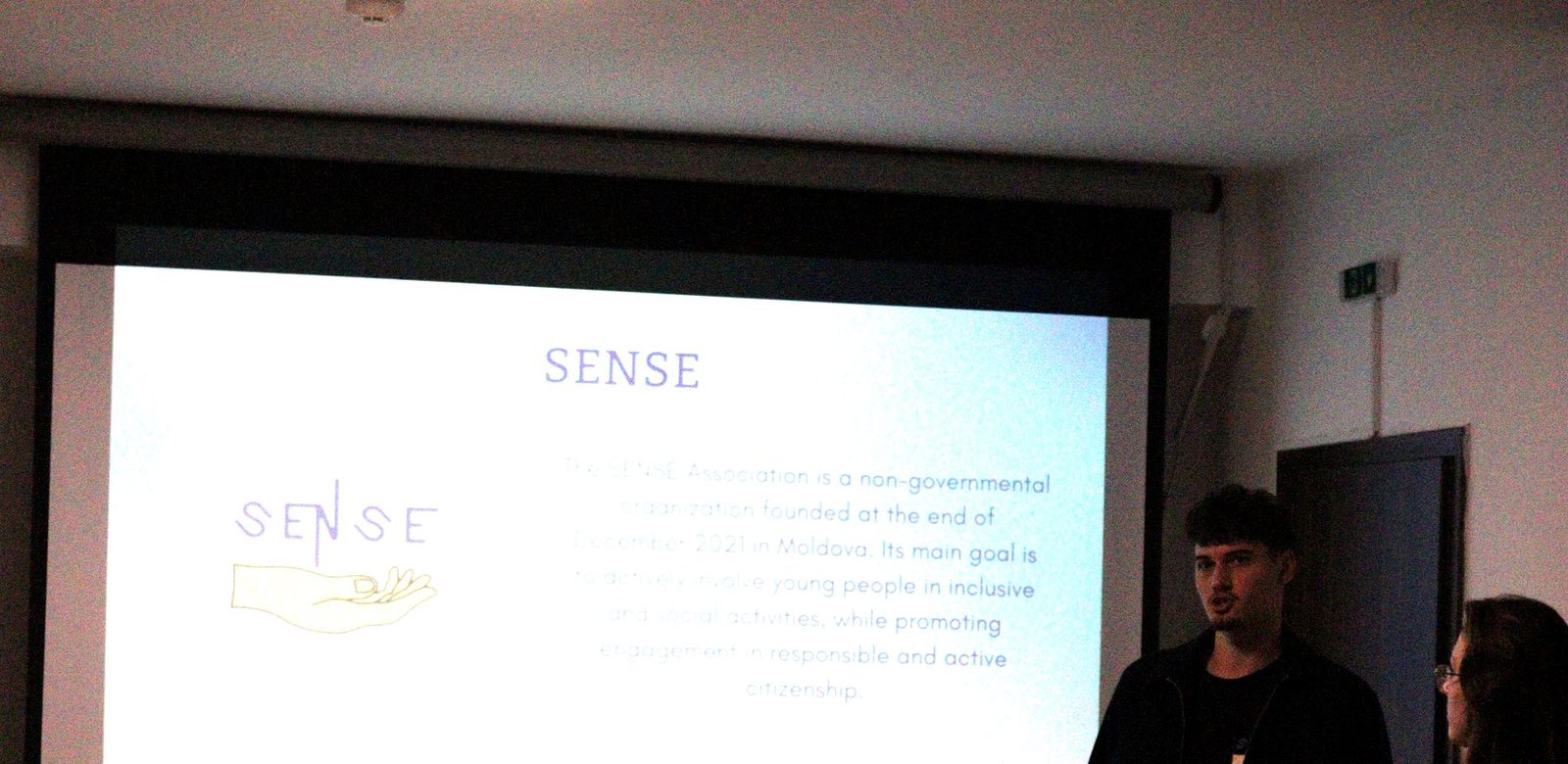
The SENSE team presenting Moldova, next to the projected SENSE slide.

Moldova

  • SENSE was founded in 2021 after one founder lost his eyesight and built, with friends, an organisation where empathy is action.
  • The name plays on “the five senses” and the Romanian “bun simț”.
  • Around 20 approved Erasmus+ projects in four years — mobility is the practical route to skills and confidence.
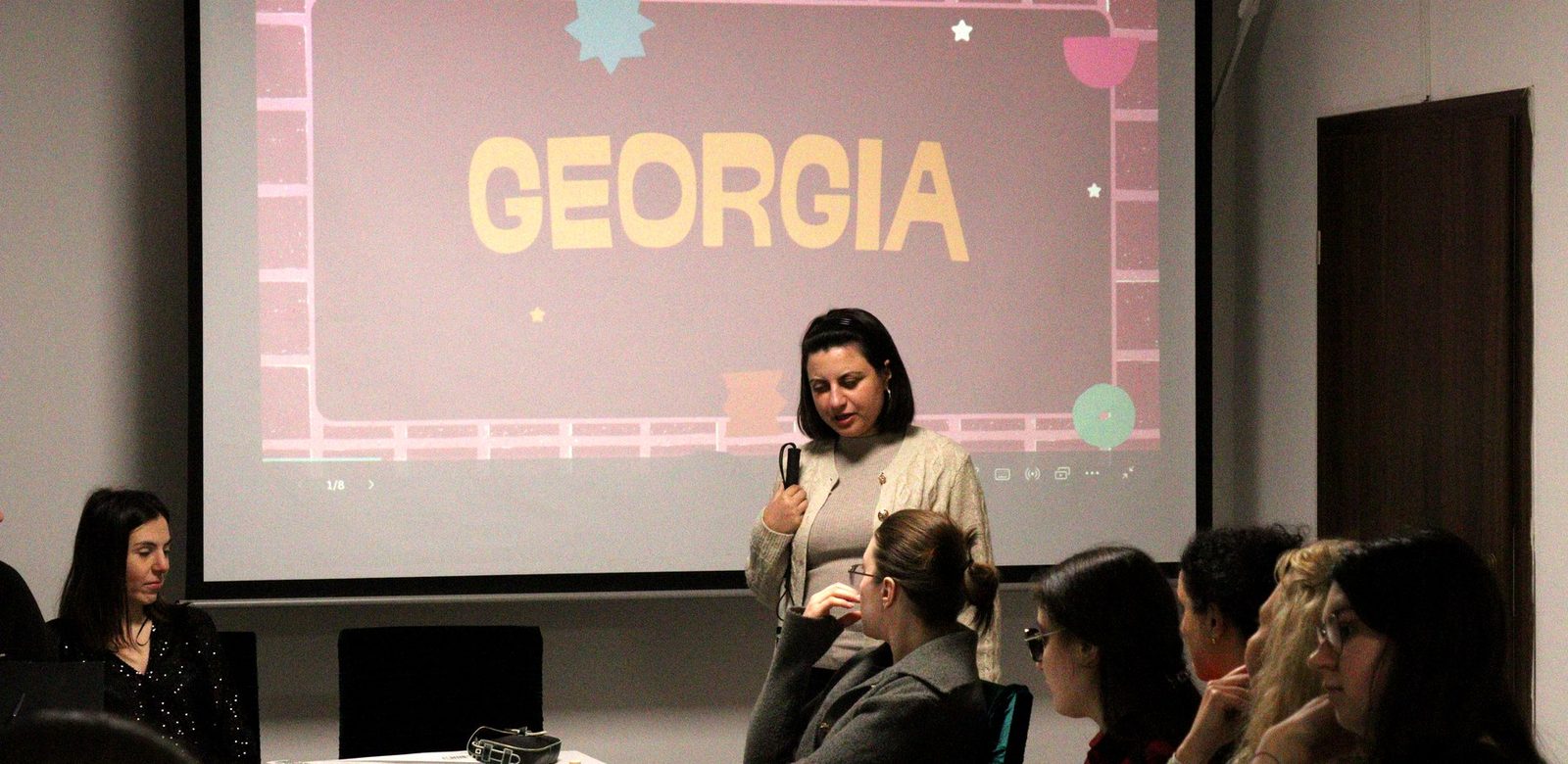
A Mariani team member presenting Georgia with a microphone, under the projected “Georgia” slide.

Georgia

  • ~3.7 million people; the Georgian Blind Union counts ~2,700 members — and there are no official statistics.
  • Inclusive education is legal at every level, yet there is one boarding special school in Tbilisi and no specialised kindergarten.
  • Personal assistance of 60–120h/month exists; the Marrakesh Treaty is signed, but there is no guide-dog law or employment quota.
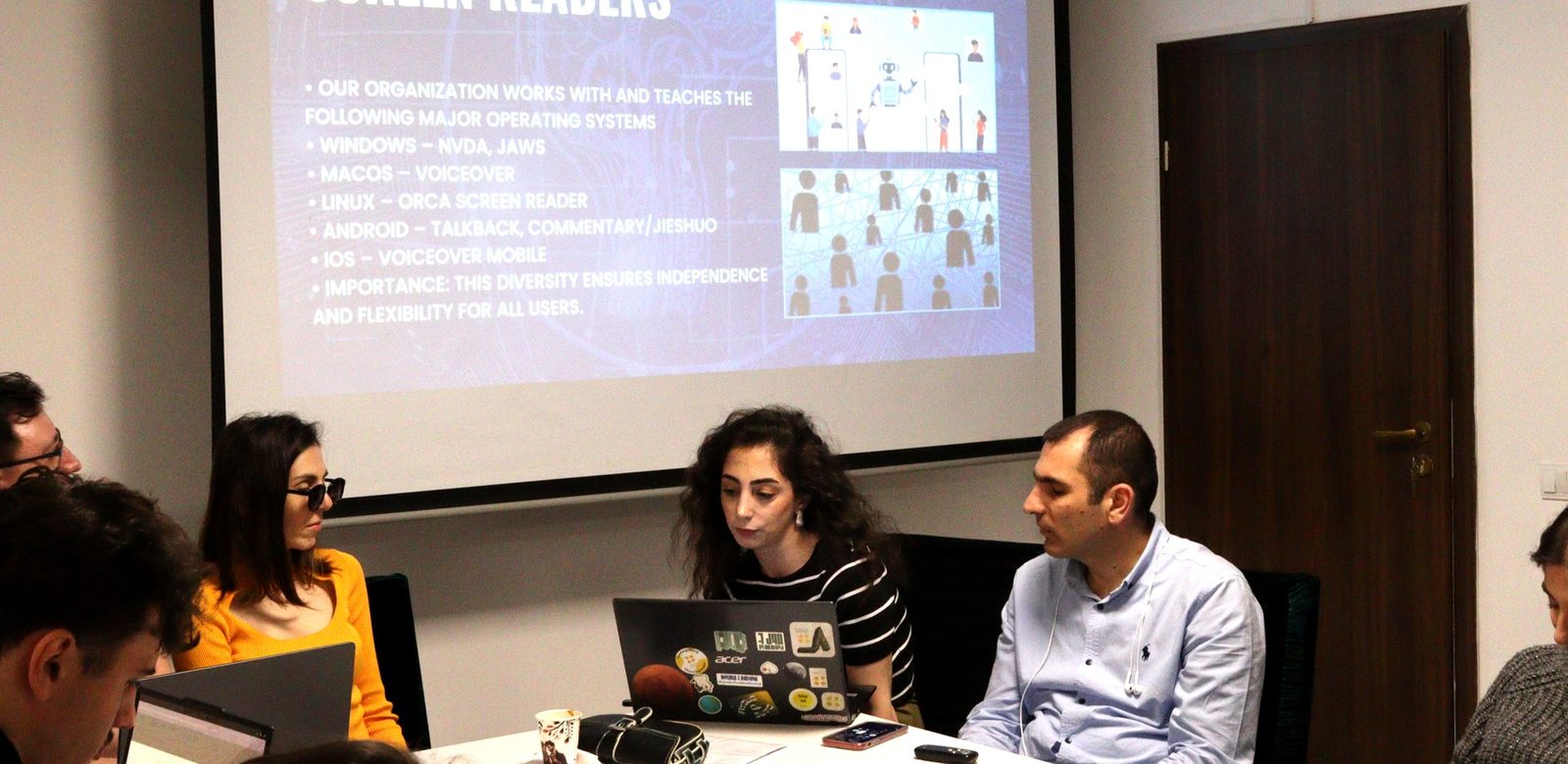
The White Cane team presenting Armenia, seated under a slide about screen readers.

Armenia

  • Reliable national statistics are missing — a gap the NGOs name openly.
  • White Cane works with the Armenian Society of the Blind and the Children of Armenia Fund.
  • Everyday independence leans on a rich low-tech toolkit — talking devices, Braille displays and tactile tags.
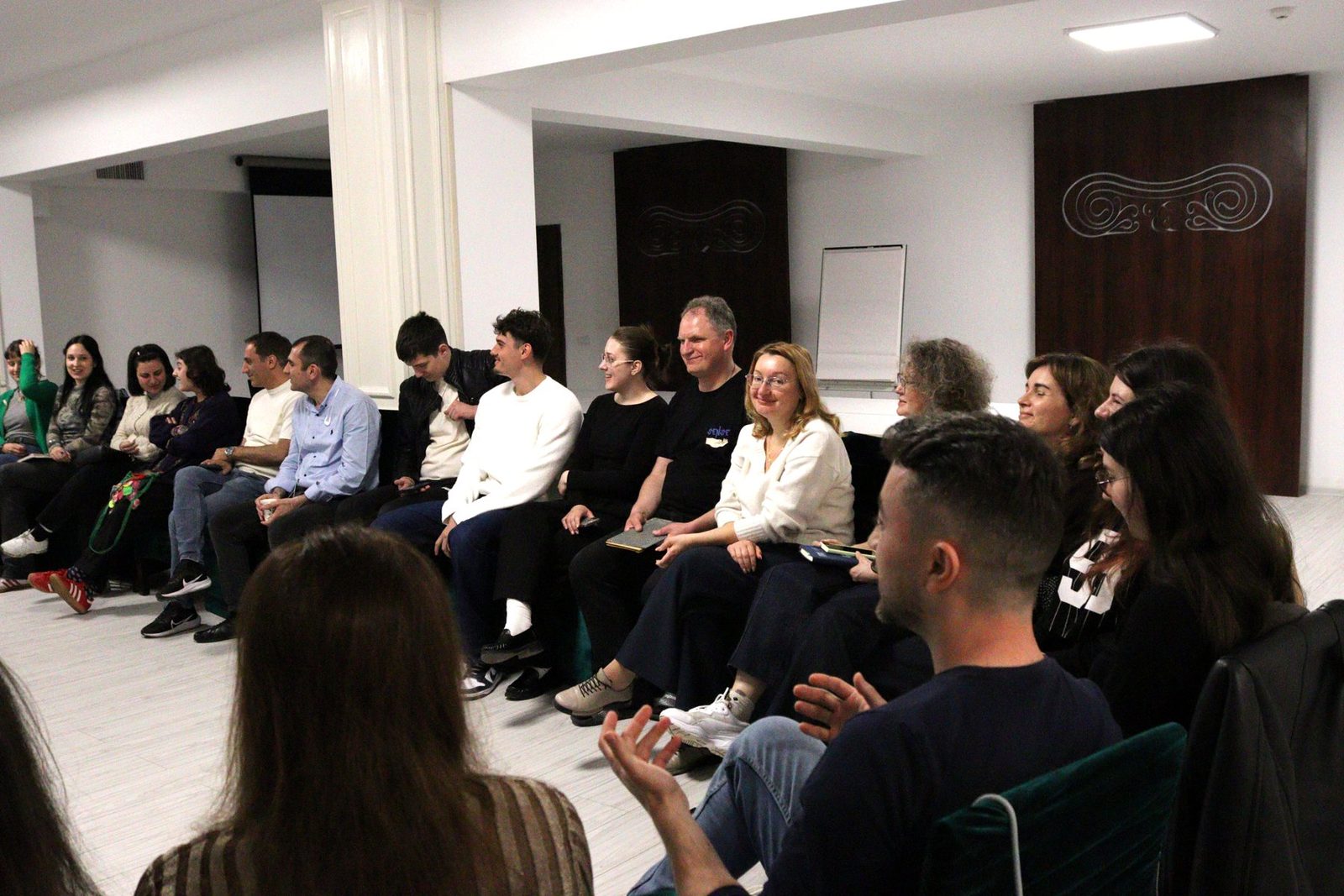
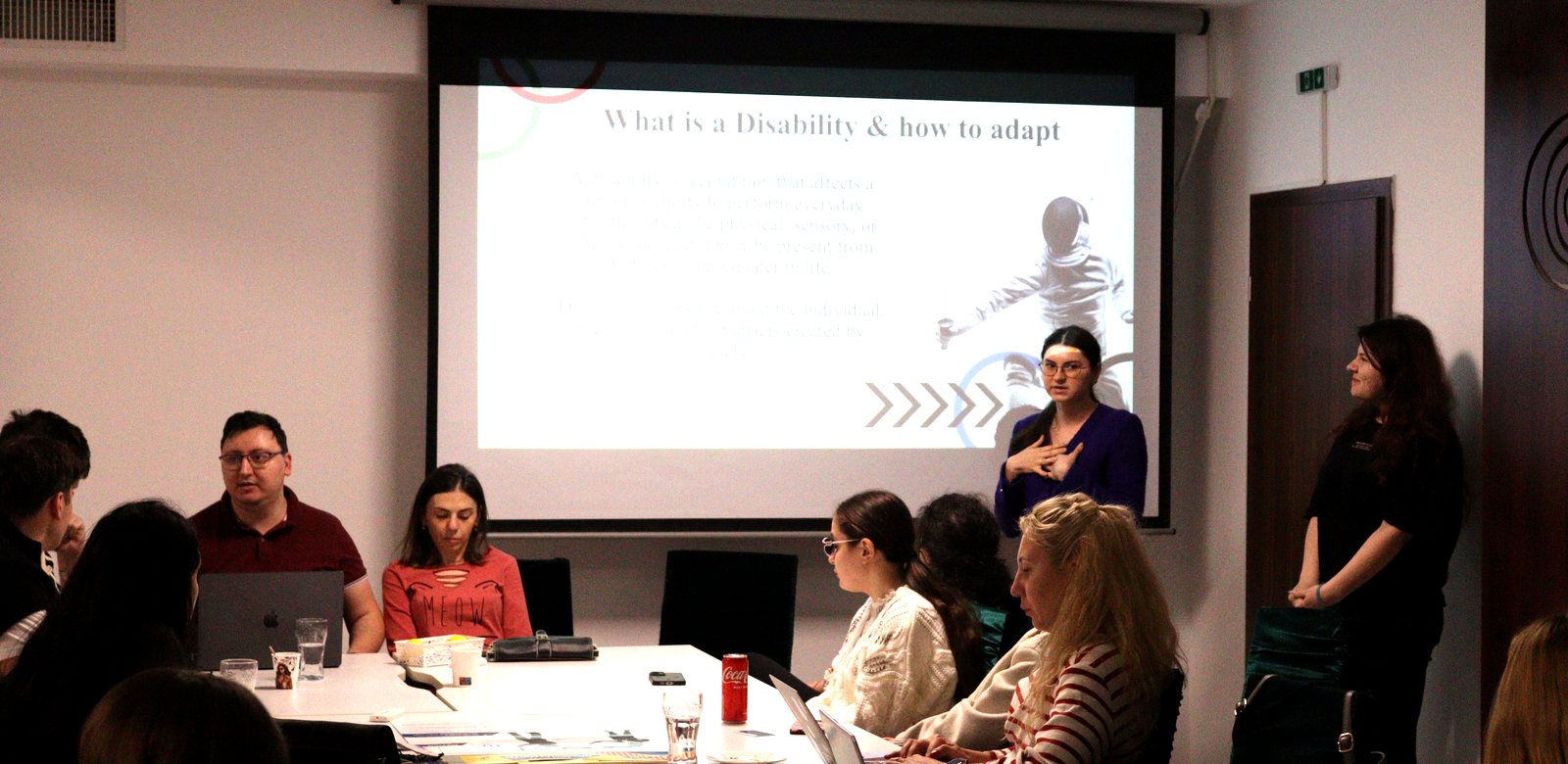
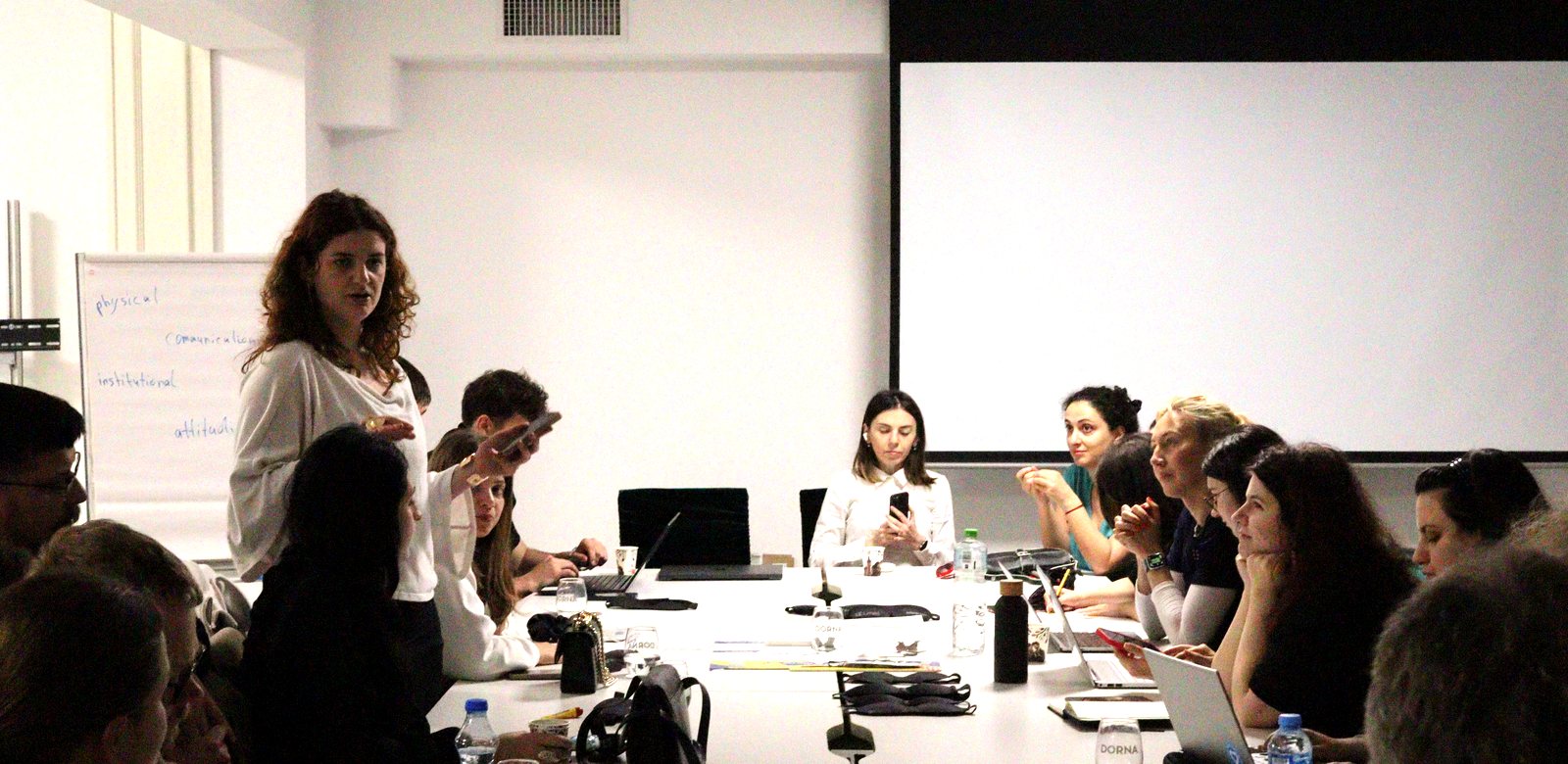
The whole group seated in a wide semicircle, listening during the country presentations.
Six presentations, six systems — one shared goal.

What we did, workshop by workshop

Every activity was tested with mixed groups of blind, low-vision and sighted participants. None require sight to take part fully.

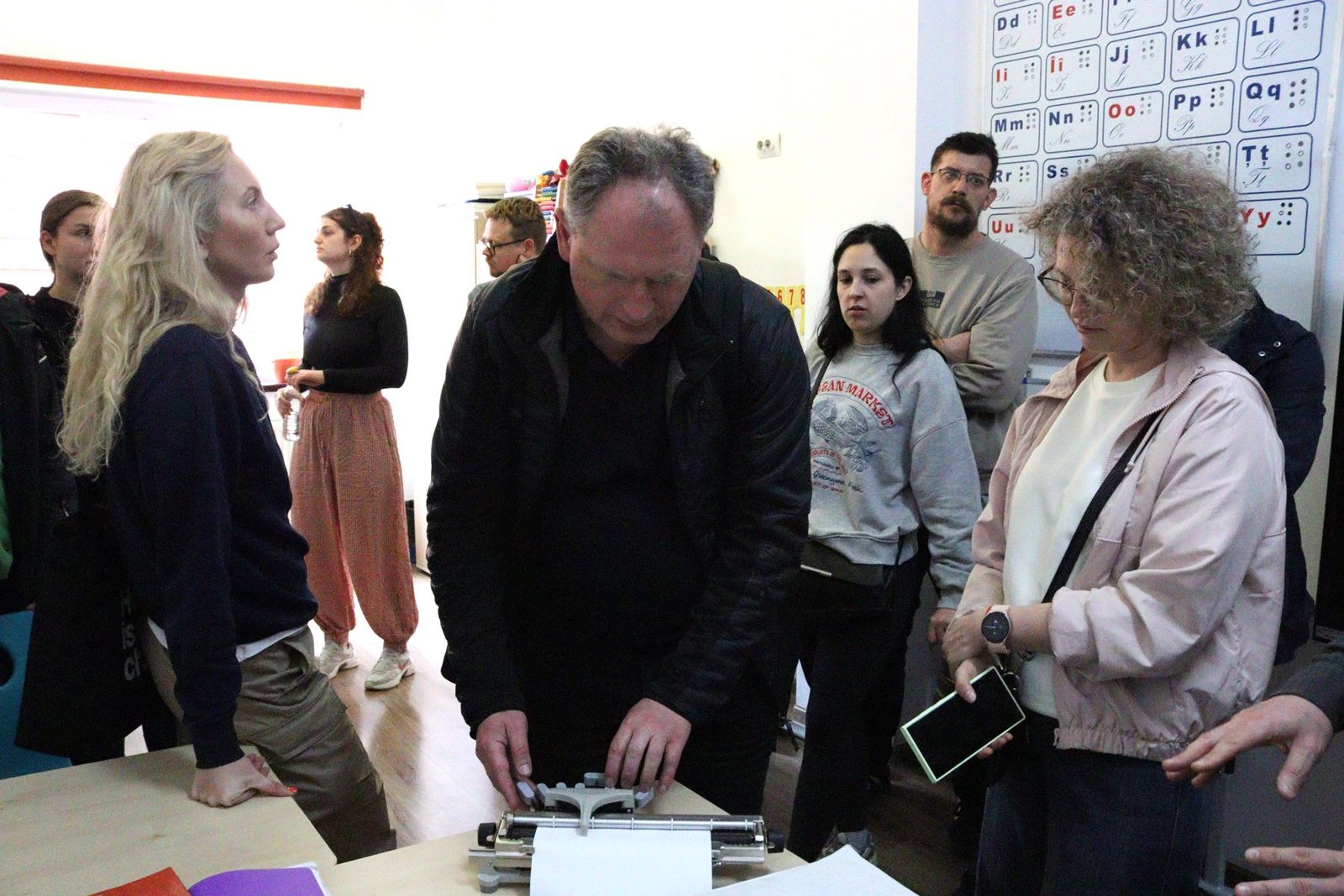
A participant tries a Braille typewriter during the visit to the special high school.

Understanding & etiquette

The basics of visual impairment, correct language, and the sighted-guide technique — how to offer, and accept, a guiding arm.

A blind pedestrian with a white cane navigating a city street.

Accessibility & mobility

Real-world barriers — parked cars, missing announcements — and how AI navigation, tactile paving and good web design help.

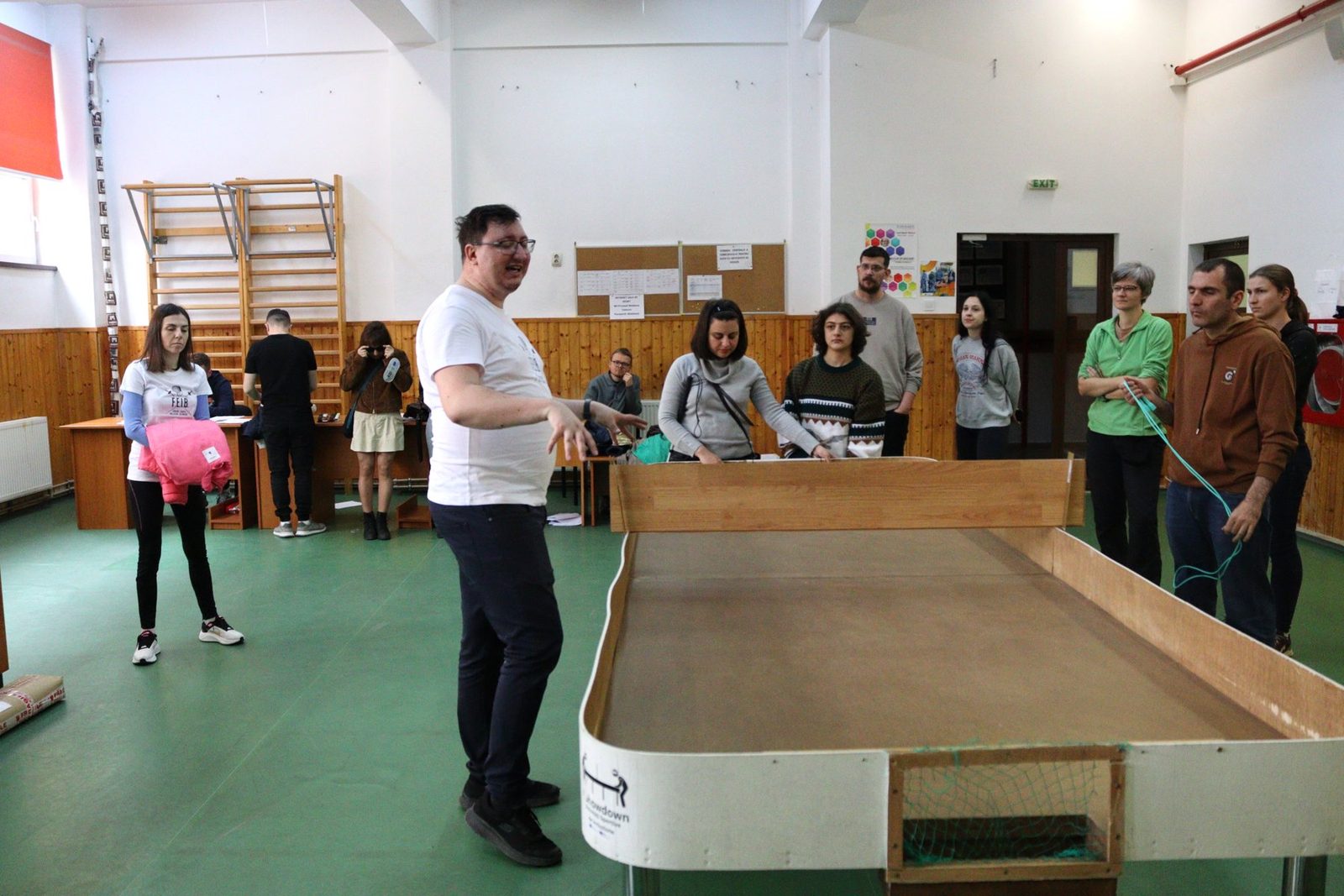
The Showdown table with an instructor explaining the game to the group.

Sports for the blind

A full day of blind sports played blindfolded: Showdown, adaptive climbing, blind football (5-a-side, “voy!”) and goalball.

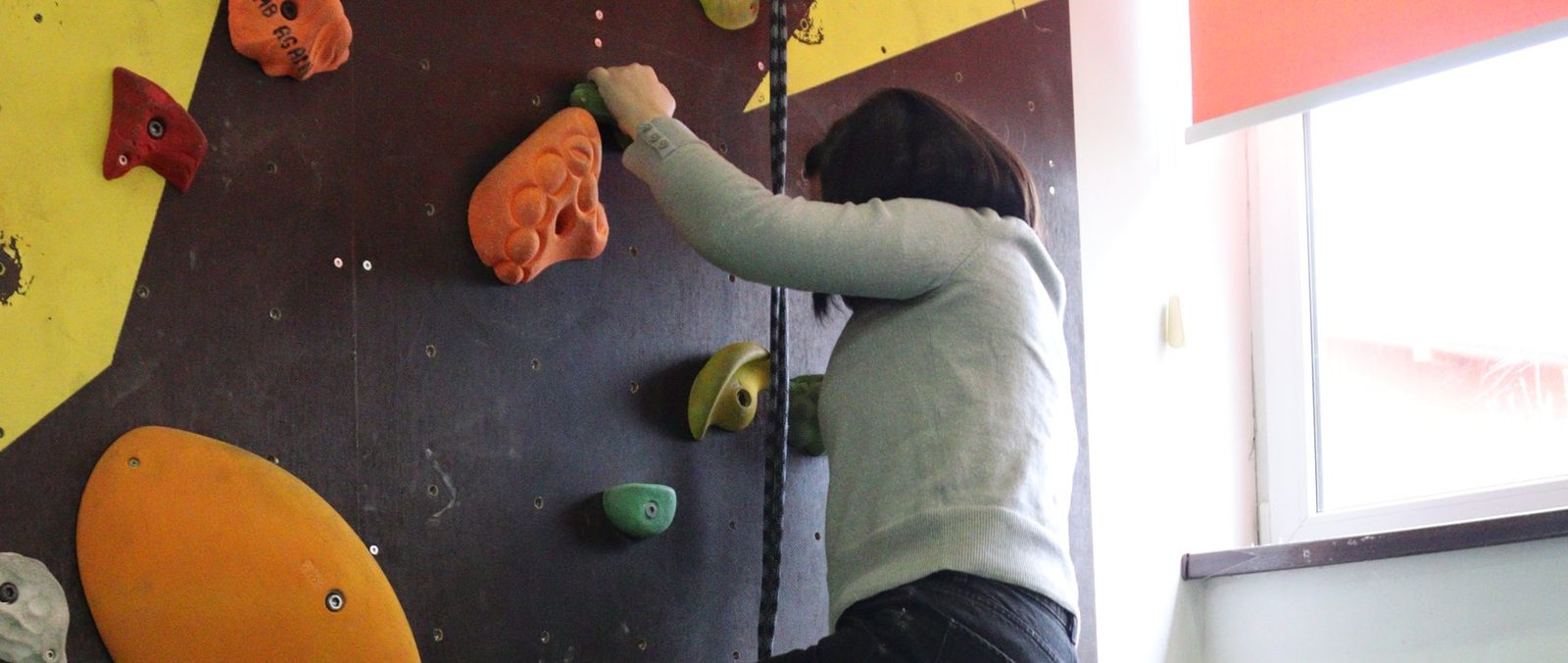
A participant climbs an indoor climbing wall; a white cane leans against the wall below.

Adaptive climbing

Climbing by touch and voice: a guide calls the holds while the climber maps the wall by hand. Sighted participants climb blindfolded too.

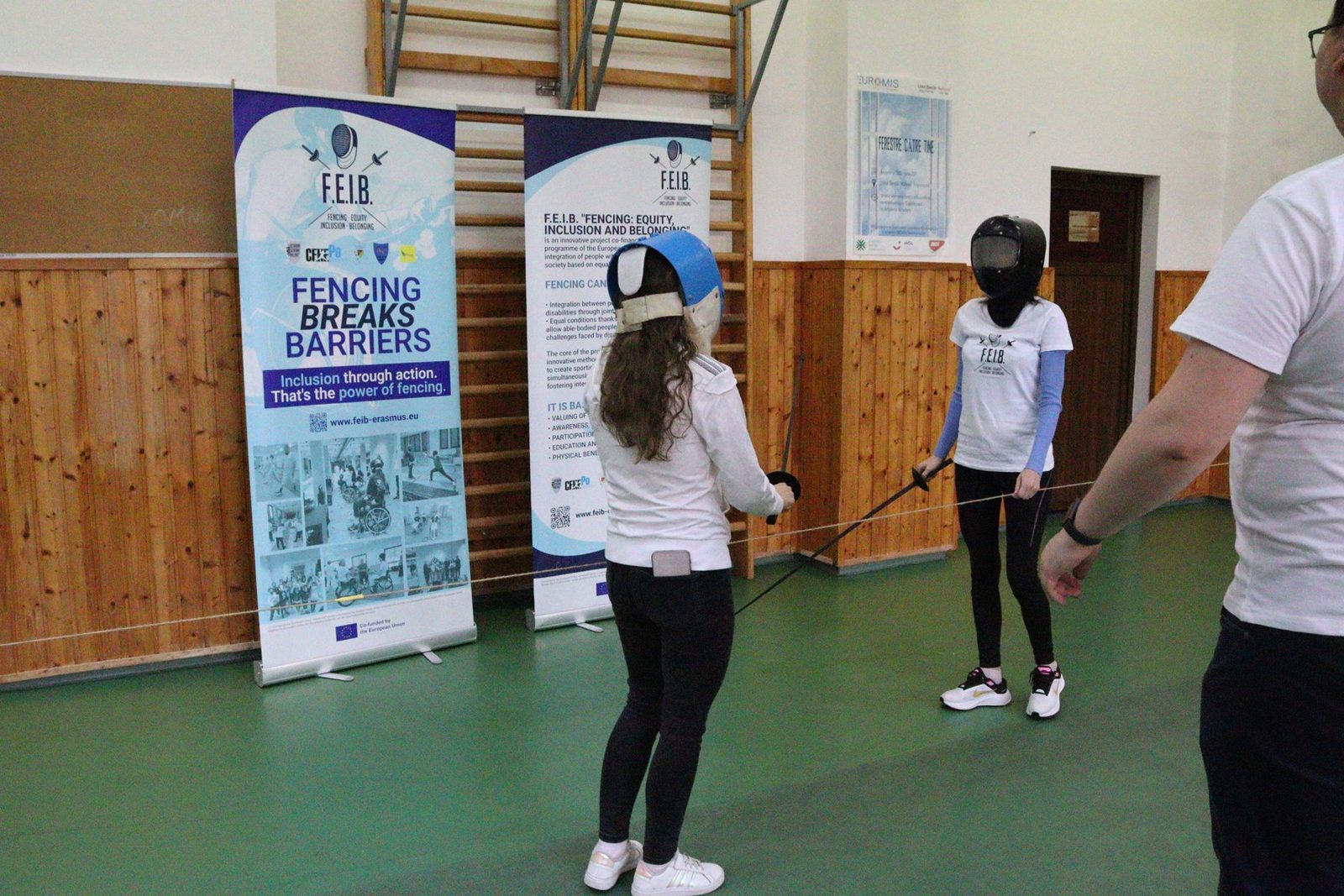
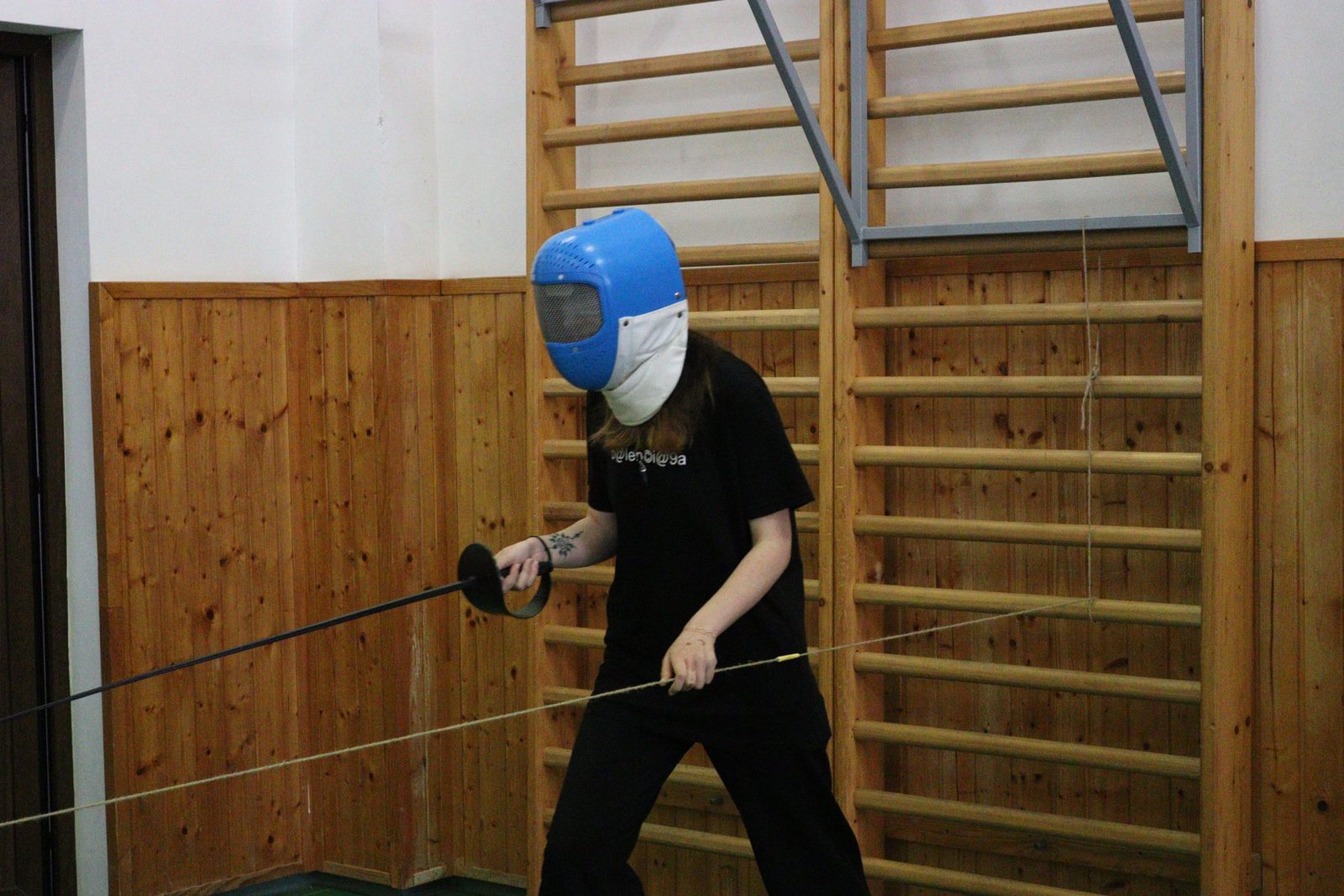
Two participants in fencing masks practise with foils.

Para-fencing

Fencing adapted for VI athletes on an oriented piste, coached by sound and touch — blind and sighted fencers meet as equals.

A blindfolded participant dribbles a sound football across the room.

Blind football

Futsal with a rattling ball and boards along the pitch; everyone but the keeper wears eyeshades, and players call “voy!” to avoid collisions.

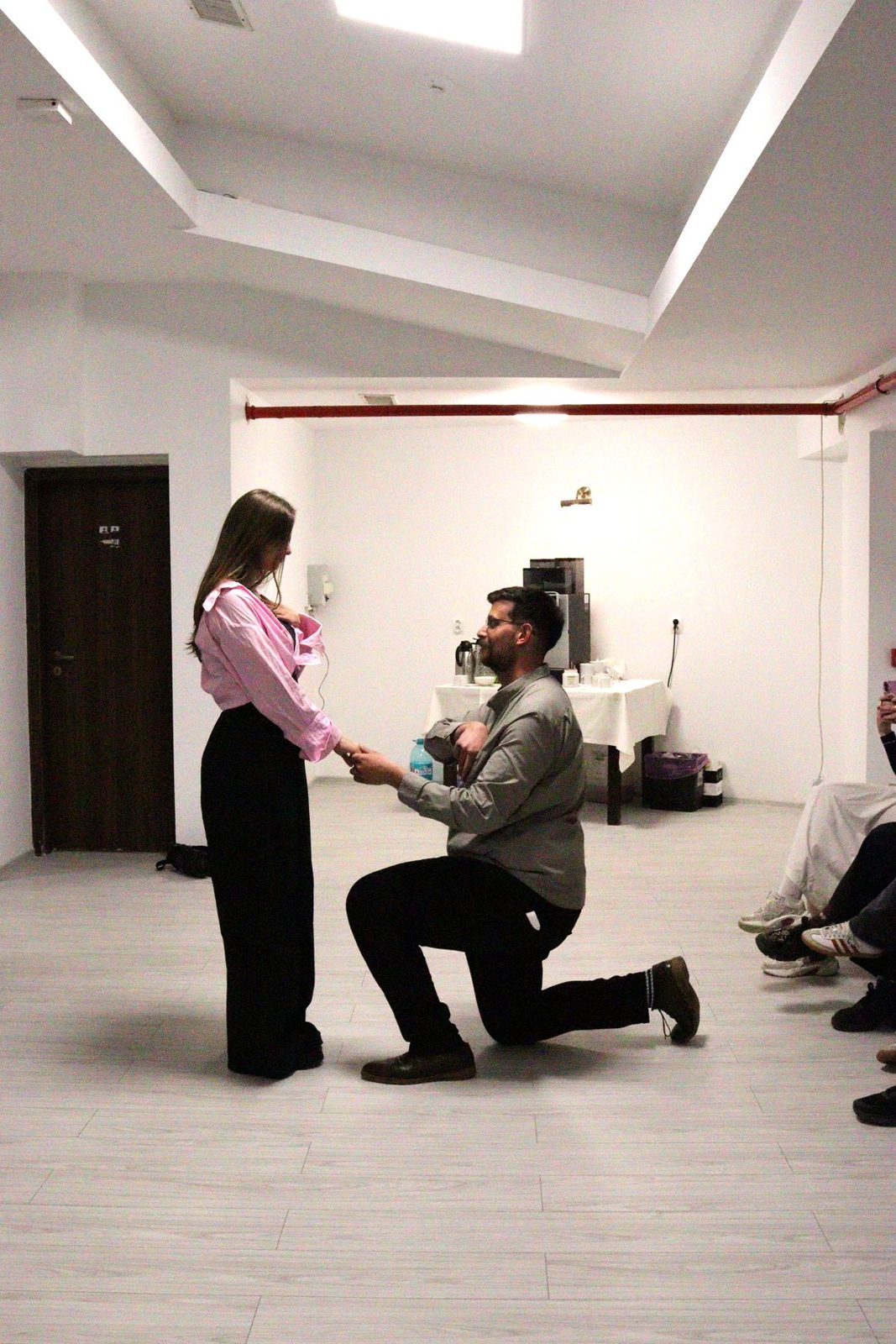
Participants rehearse a scene during the theatre workshop.

Eyes Shut Theater

Sensorial theatre experienced with eyes shut. The Serbian team performed a piece for the whole group, so everyone lived it as a blind spectator would — equal participation, made real.

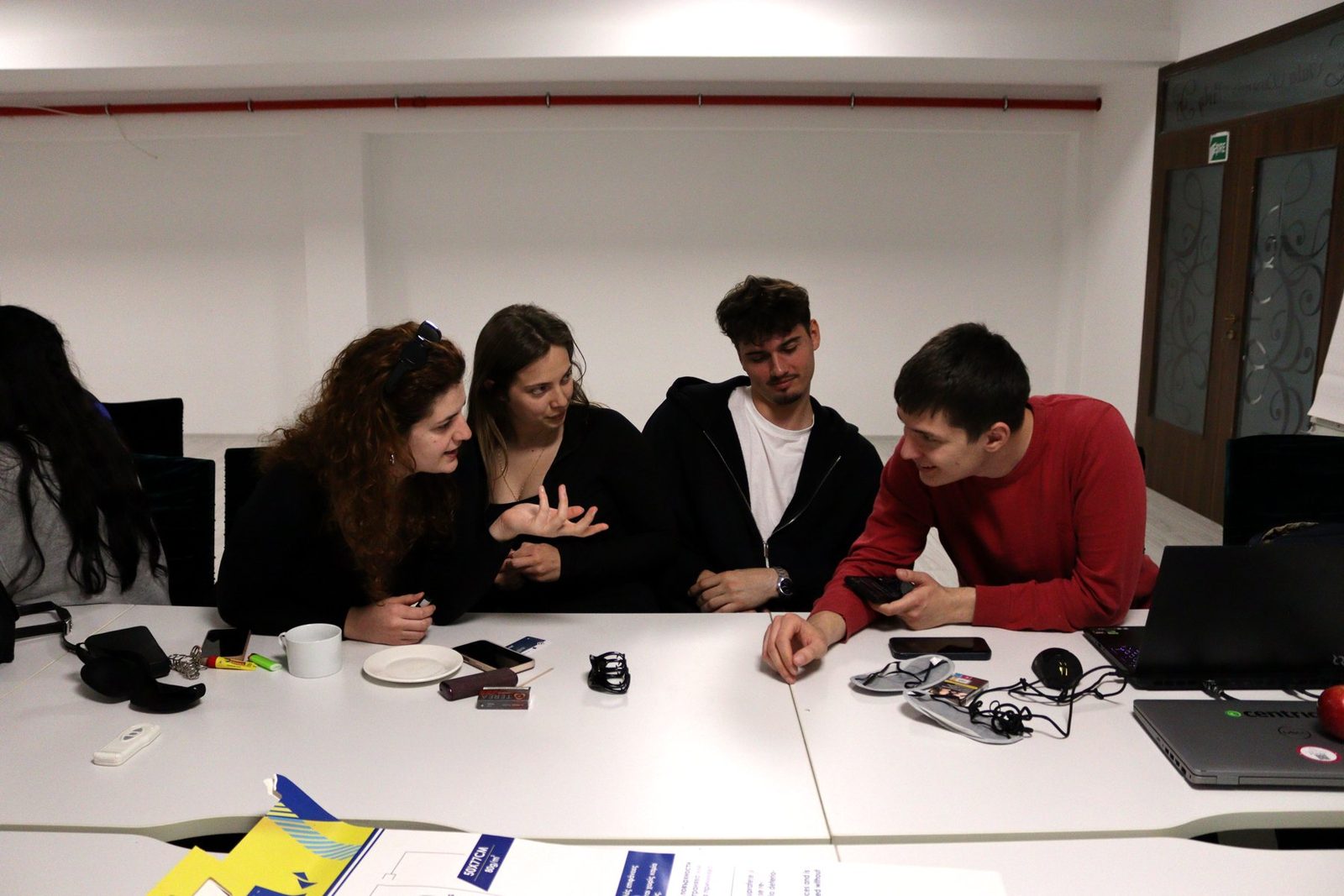
A team plans their short film around a table with audio gear.

Film & photography

VI and sighted partners plan and shoot short films — and photograph the city — together, by sound and description.

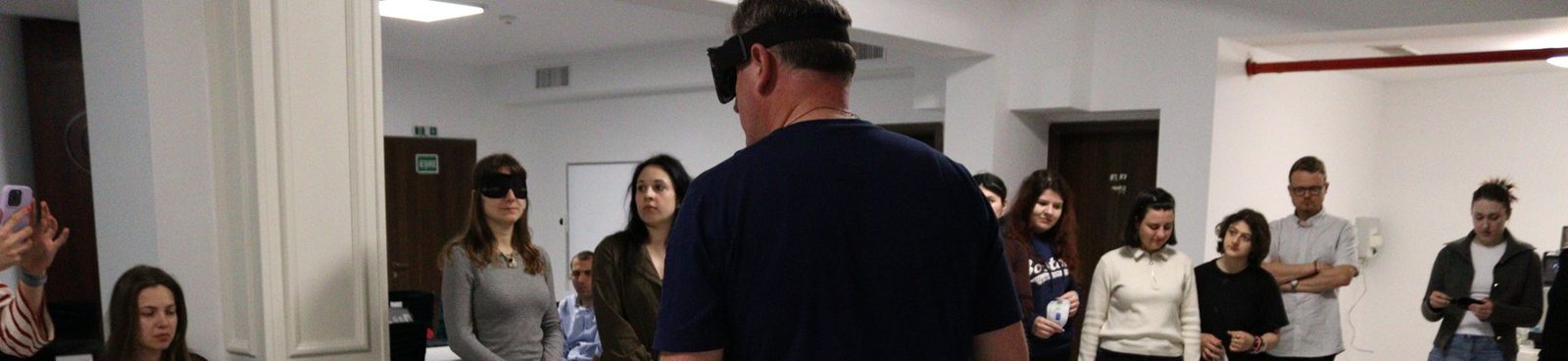
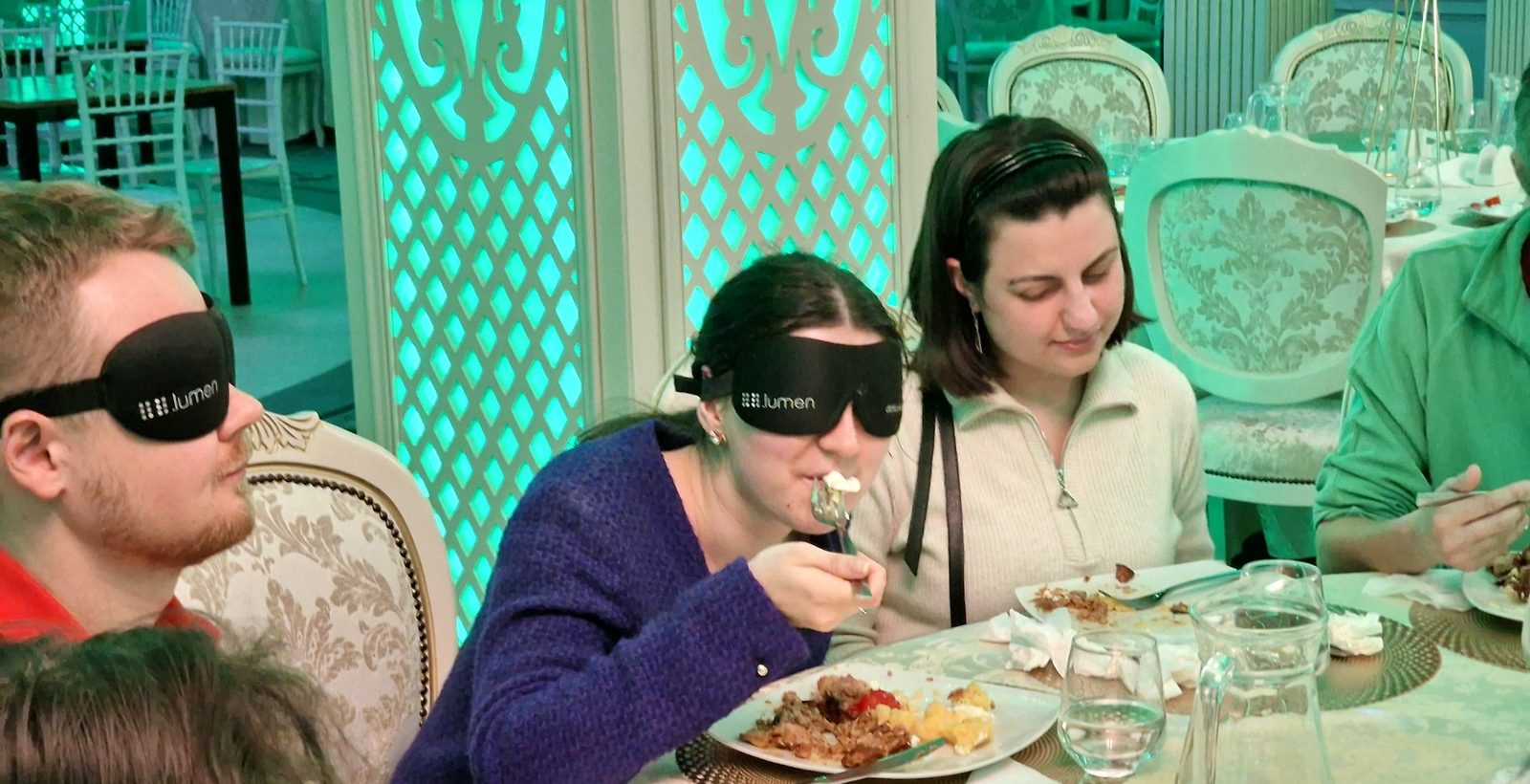
A participant wearing an eyeshade tastes her meal at the festively set table.

Dinner in the Dark

A shared meal eaten entirely without sight. Conversation replaces eye contact, and everyone shares the describing and serving.

Projects & partners in the field

VISION drew on the people building inclusion for blind youth across Europe.

Related projects

A participant lunges with a foil during a para-fencing session.

F.E.I.B. — Fencing: Equity, Inclusion & Belonging

An EU co-funded project where blind and sighted people fence on equal terms, with the declared ambition of reaching the next Paralympic Games. Forza Junior Costuleni is a partner.

feib-erasmus.eu (opens in a new context)

Stakeholders & partners in the field

Organisations that are not project partners but shaped the training course by sharing their work with the group.

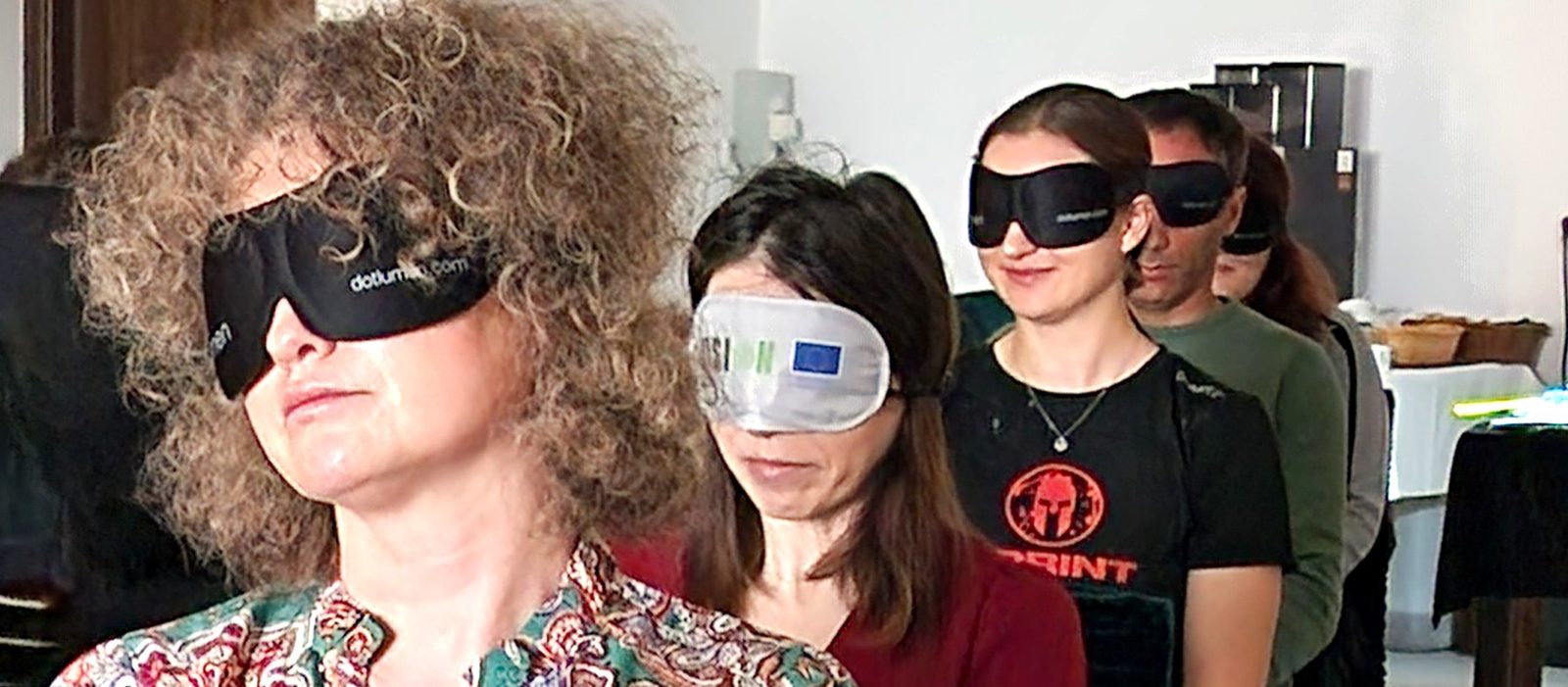
.lumen

Romanian deep-tech glasses that replicate the main features of a guide dog. Every VISION participant tested them, with or without a disability, during the breaks.

dotlumen.com (opens in a new context)

“Moldova” Special High School, Târgu Frumos

The special high school for visually impaired students where the group spent a full day — testing sports, para-fencing and methods together with the students themselves.

Asociația Super Tineri (ASYRIS), Târgu Frumos

Visited after the school day for a conversation on long-term volunteering — and on how, through art, they include people with visual impairments and create work dedicated to them.

The VISION guide

A free, fully accessible toolkit for youth workers

Every workshop, method and app from the training course — with described images and a tagged reading order, so it works with screen readers such as VoiceOver, NVDA and JAWS. Built to be an example of the accessibility it teaches.

Download the guide (accessible PDF)

PDF · tagged for screen readers · English

Results & impact

  • A free, fully accessible practitioner guide produced and shared — tagged for screen readers, with described images and a logical reading order.
  • Youth workers from six countries trained together, then carried the methods home.
  • Methods tested with real VI students during a full day at the “Moldova” Special High School in Târgu Frumos.
  • Follow-up activities seeded in partner countries, from adaptive fencing in Romanian high schools to tactile-image workshops.

Partner organisations

The six organisations that took part in the VISION training course.
OrganisationCountryRole
Asociația Clubul Sportiv Forza Junior CostuleniRomaniaHost
Osvěta z.s.CzechiaPartner
PATOS Youth TheatreSerbiaPartner
SENSEMoldovaPartner
MarianiGeorgiaPartner
White CaneArmeniaPartner
Co-funded by the European Union

Co-funded by the European Union

Views and opinions expressed are however those of the author(s) only and do not necessarily reflect those of the European Union or the European Education and Culture Executive Agency (EACEA). Neither the European Union nor EACEA can be held responsible for them.